The Circle of Doom: Why Cutting Costs in Hospitality Keeps Making Everything Worse

Every owner or manager I speak to right now is fighting a different fire, one is dealing with a wage bill that's grown faster than revenue, another's lost three good people this quarter and can't backfill fast enough and a third is watching reviews mention things that never used to come up, a slow check-in, a request that got forgotten, a member of staff who seemed stretched thin.
It's tempting to treat these as three unrelated headaches but that would be naive as they're not. They're the same problem, showing up in three different places and each one is quietly making the next one worse, let me explain.
Squeeze one: the wage bill nobody can outrun
Lets start with the person carrying the financial risk. In the UK, the National Living Wage rose to £12.71 in April 2026, a 4.1% increase, while the rate for 18 to 20 year olds jumped 8.5% to £10.85 which matters more than the headline number suggests given how heavily hospitality relies on younger staff on the floor and in the kitchen. Employer National Insurance climbed from 13.8% to 15% the year before, with the threshold where it applies pushed lower too. UKHospitality puts the combined cost of these changes at £1.4 billion across the sector. with wage costs now sitting at roughly 35% of revenue for a typical owner whether corporate or independent and in some reports the cost of that labour has risen faster than the wage increases meant to explain it.
This isn't a UK-only story suprisingly, similar pressure is showing up wherever minimum wage floors and employer costs have climbed this year, New Zealand and Australia included. UK hospitality insolvencies stayed above 220 a month through most of 2025, third highest of any UK sector behind only construction and retail. None of that points to bad management it simply points to margin that's genuinely gone.
Faced with numbers like that, tightening the labour line is the obvious response. Cut a shift, delay a hire, run leaner, It's rational but it's also step one of the loop.
Squeeze two: the people left standing
Cutting hours doesn't reduce the amount of work that needs doing, it just spreads the same workload across fewer people. This year the industry gave that pattern a name, the "vicious cycle", understaffing produces burnout, burnout produces resignations and every resignation deepens the understaffing for the people who stay which also increase burnout and unhappiness.
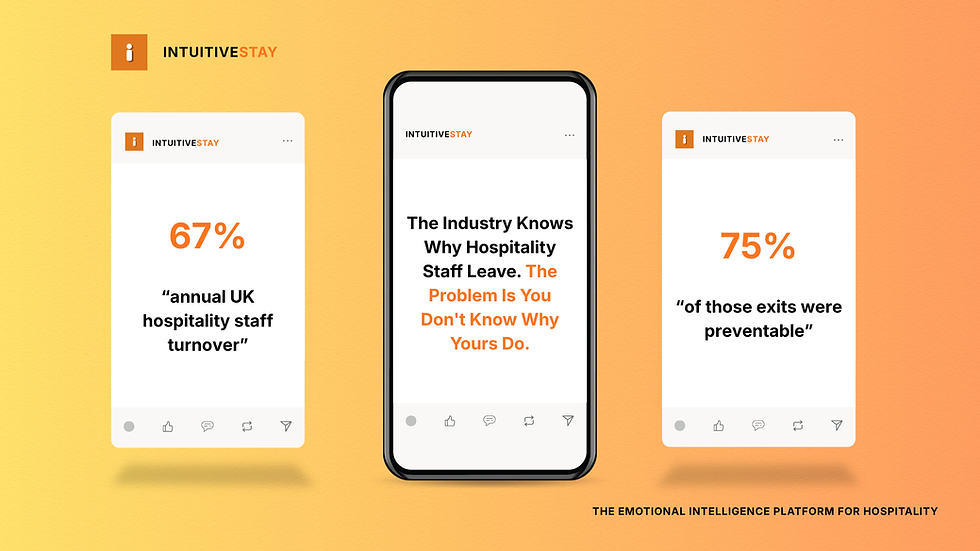
CIPD puts average annual staff turnover across UK organisations at 34%, well past the 15% benchmark HR teams used to plan around. One analysis tracking more than 35,000 hospitality employees found turnover had eased slightly, from 75% down to 67%, but only because the owners were paying more to hold onto staff, which helps retention and does nothing for the margin problem that started this whole chain. Trim the labour line to protect the budget and the underlying pressure hasn't gone anywhere it's just landed on a smaller group of people with less capacity to carry it.
Squeeze three: the guest and the twist nobody expected
Here's where most people's assumptions break down, mine included. You'd expect guests paying more for a service delivered by a thinner, more tired team to be less happy about it but surprisingly the data says otherwise. The 2026 Guest Experience Benchmark recorded global guest satisfaction at a record 86.7% in 2025, despite the cost pressure running through the entire industry. Europe came in just behind the global figure, at 86.3%, which the report attributes to European guests holding particularly high standards rather than getting a worse experience. Either way, price increases aren't the thing driving guests away.
What has changed is patience for mistakes and this is the price paid for all of the above. Analysis of the luxury segment found guest satisfaction scores are now around 10% more sensitive to staffing levels than a few years back, meaning a single service lapse now costs a property more, in reviews, in reputation and in whether the guest returns than the same lapse would have cost a few years ago. Guests will still pay the higher rate but they will not forgive the error that a stretched and exhausted team is statistically more likely to make while delivering it.
That's the loop closed, cost pressure forces cuts, cuts produce burnout and turnover, burnout and turnover produce exactly the kind of inconsistency guests have stopped tolerating, at the worst possible moment for a business that can least afford to lose the booking.

Where it can actually break
None of this touches the tax rate, business rates or the wage floor, the two things actually squeezing owners in the first place. Those are structural and no amount of good management changes a National Insurance rate.
Retention is different. it's the one part of this loop that sits fully inside an owner and managers control. CIPD puts the average cost of hiring a replacement in the UK at £6,125 and that's before the fuller picture, Oxford Economics research puts the total cost of losing and replacing an employee, once lost productivity and training are factored in, at closer to £30,000. On a margin that's already been squeezed from every other direction, that's not something that can be ignored, yet still is.
None of this is a new idea, either. Heskett, Sasser and Schlesinger made the same case in the Harvard Business Review over thirty years ago, staff satisfaction drives customer loyalty and loyalty drives profit. It was true before wage floors and staffing shortages made it urgent, it's simply harder to look away from now.
Nobody reading this can shrink the tax bill or soften the wage market but what's actually within reach is who stays and whether the team standing on the floor when a guest walks in still has the capacity to deliver the experience that guest is now paying more for and forgiving less about.


Comments